Showing all 4 resultsSorted by latest
-


$19.99
Most people set their goals in January and forget them by February. Not because the goals were wrong — because nothing was built to hold them.
The 2027 Reset is a 44-page guided workbook that does the whole year, not just the first week of it. You close out 2026 honestly, decide what 2027 is actually for, build a real plan, and then check in every single month until December.
-

$14.99
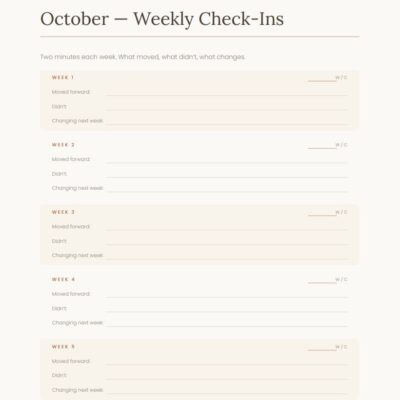
There are ninety days left, and they are not like the other two hundred and seventy. Spend them on purpose.
October, November and December are the only stretch of the year where you can see both ends at once. You know how the year has actually gone. And you can still change the ending.
Most people don’t. Q4 gets handed away — to the year-end push, to the holidays, to the slow slide into “I’ll start properly in January.” By the second week of December the quarter has happened to you rather than the other way round.
That surrender to January is expensive. It writes off twelve weeks, and it guarantees you arrive at the new year with the same unfinished list you started this one with — which is exactly the feeling that makes people set unrealistic resolutions to compensate.
-

$9.99
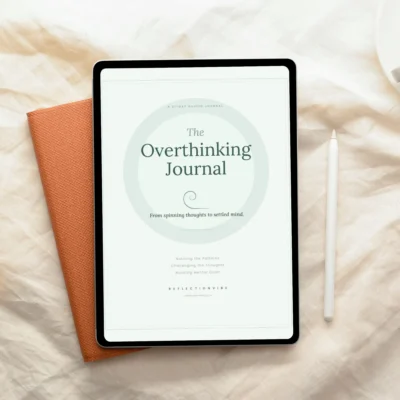
From spinning thoughts to settled mind.
You have had the same thought forty-seven times this week. You know the one. It arrives while you’re brushing your teeth, or driving, or almost asleep, and it doesn’t resolve — it just circles.
Overthinking isn’t a character flaw. It’s a learned pattern: your mind decided somewhere along the way that thinking about a problem felt like solving it. It’s trying to protect you. It’s simply doing it badly.
And the reason willpower doesn’t work here is that you cannot stop a thought by deciding to stop it. What you can do is get it out of your head and onto a page, where you can finally see it clearly enough to choose something different.
-

$12.99
Say the thing. Keep the peace anyway.
You already know where your boundaries are missing. The name on your phone that tightens your chest. The standing commitment you resent every single week. The yes that arrives before you’ve decided anything.
Knowing was never the problem. Saying it out loud felt more dangerous than the resentment did.
That instinct isn’t weakness — it’s training. Most of us learned early that being good means being available, that a no requires a justification, and that other people’s comfort is ours to manage. Those lessons went in deep.
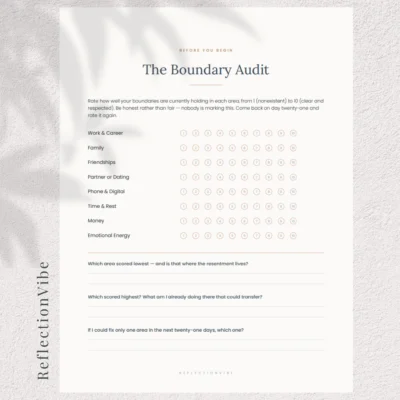
Over 21 days, this journal does three things: finds the lines, says them out loud, and holds them when somebody pushes back. Because somebody will.